
Kata, Sabaki and graded progress in Ashihara
How the style’s forms train real combinations — and why belts mark skills, not only time served.
In many karate styles, kata is the heart of tradition: a solo sequence that preserves technique, rhythm and spirit. In Ashihara Karate, kata has an even more applied mission. Sabaki-related forms are often presented as models of rational movement you can train alone, then with a partner, until they become kumite combinations. They are not “dances” separate from fighting. They are a map for the body.
From beginner kata to advanced forms
Sources from the school in Japan mention several categories of forms — from basic and beginner kata to kumite forms, jissen (practical), self-defence, weapons or refinement forms. Exact names and order can vary between organisations; the shared idea is that each level adds complexity: new angles, longer combinations, rhythm changes, links between defence and offence.
At the Pitești club we teach kata as a pedagogical tool. Beginners learn short patterns that fix stances and breathing. As they advance, patterns lengthen and connect to Sabaki drills. When a child can show a form cleanly, we also ask for simple bunkai: “what do you do if your partner hits here?” That way kata does not stay blind memorisation.
Belts: signals of competence
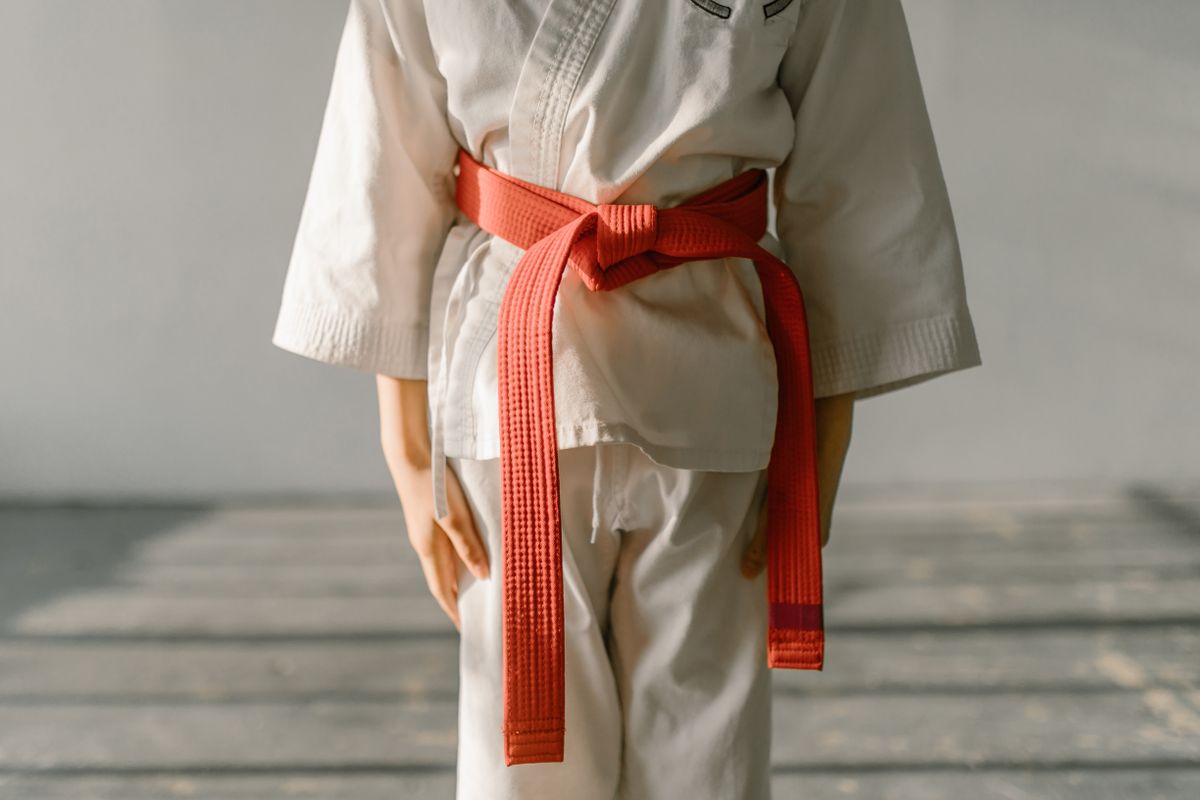
Graded progress (kyu / dan, depending on the system used) should mark verifiable skills: technique, attitude, consistency, ability to help the group. Time on the floor matters, but it does not replace quality. A good exam is predictable: the athlete knows what is required, has worked the months before, and the instructor confirms readiness — not “pushing” someone just to fill a list.
For parents, a belt is sometimes a trophy. For us it is a contract: “you reached here; higher standards follow.” Children learn to handle frustration when a technique fails and to celebrate real progress, not only the colour at the waist.
The link with kumite and dojo life
Kata without kumite risks staying abstract. Kumite without kata risks staying chaotic. Ashihara holds them together through Sabaki: forms train the pattern, sparring tests it. In training we alternate both, with age-based safety rules. Teenagers who understand why a pivot appears in a kata will use it more naturally in exchanges.
Kata also trains focus. In a noisy world, three minutes of clean form — breath, eyes, rhythm — are a mind exercise as valuable as a sprint.
How you can support progress at home
You do not need to “correct” technique in the hallway. Presence helps: ask what they learned, let them show a short form, praise consistent effort. If the instructor sets simple homework (stances, counting, etiquette), support it without pressure. Progress in Ashihara is a marathon of small improvements.
Common mistakes we correct
We often see three patterns: kata done too fast, without breath; a form memorised without understanding the angle; a belt chased as a trophy, not a standard. We address them calmly. We slow the form, explain why a step is lateral, link each section to a partner drill. When the child understands “why,” speed and power arrive naturally, without forcing.
We also remind families that Ashihara organisations worldwide speak of transmitting Sabaki across generations — “Souden.” In Pitești, transmission starts modestly: a clean form, a correct bow, a protected partner. From those details, a serious athlete grows.
Want to see a class where kata and Sabaki connect? Book a trial lesson. You will leave with a clear picture of our standards — and your child with an experience worth continuing.